All virtual programs are listed in Eastern Time (ET). Start times for all other continental US time zones are listed in the program description below the main image. For in-person programs, the program start time is listed in the location’s time zone.

New York, NY | Curator-Led Tour of “Krasner and Pollock: Past Continuous” with Brinda Kumar
October 20 | 9:00 am – 10:00 am
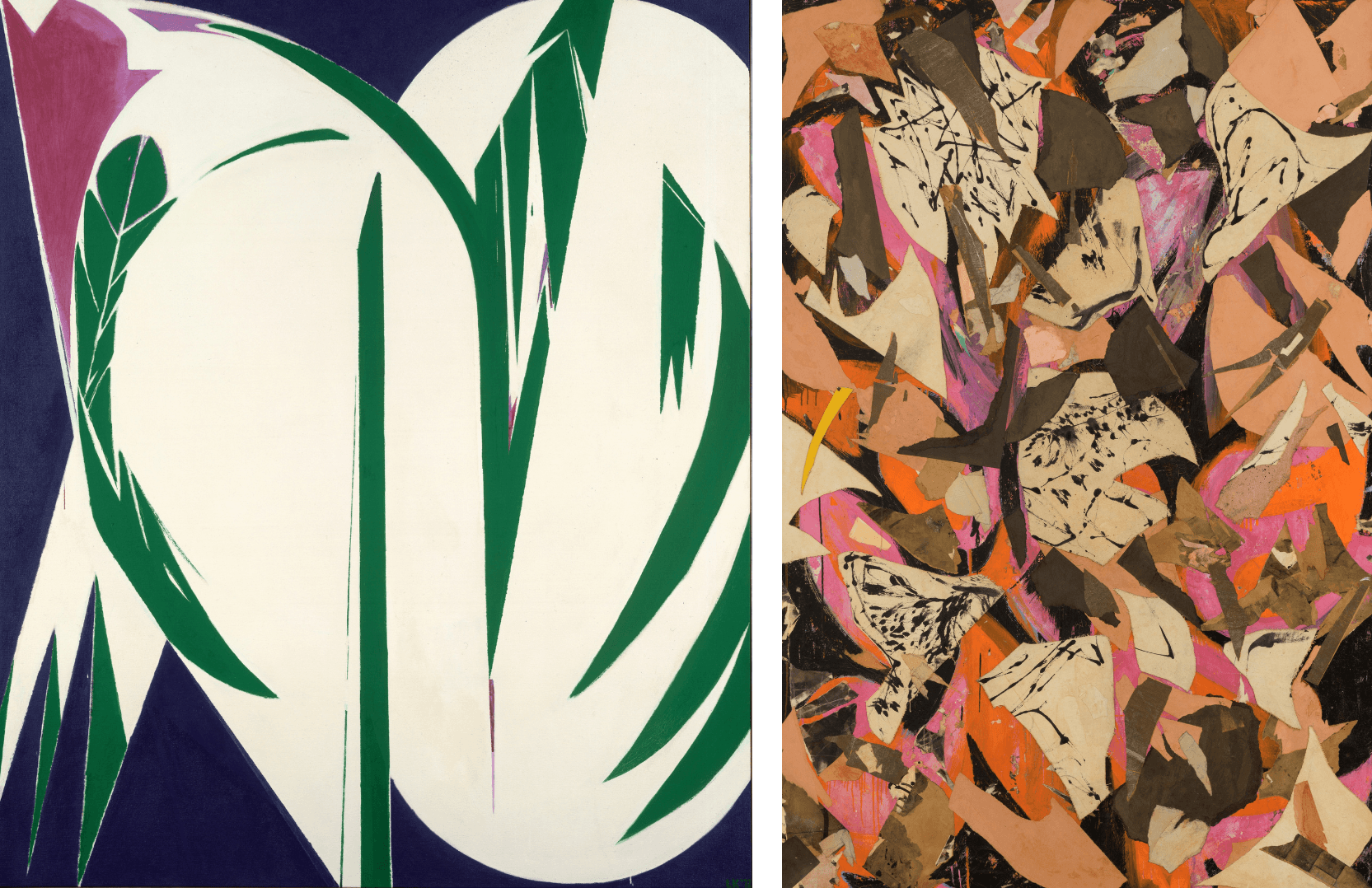
Lee Krasner (American, 1908–1984), Bald Eagle, 1955. Oil, paper, and canvas collage on linen, 77 × 51 1/2 in. (195.6 × 130.8 cm). ASOM Collection © 2026 Pollock-Krasner Foundation / Artists Rights Society (ARS), New York
Join ArtTable for a Curator-Led Tour of Krasner and Pollock: Past Continuous with Brinda Kumar before the museum opens to the public.
Drawing its subtitle, Past Continuous, from a 1976 painting by Krasner, the exhibition traces parallel lives and practices—forged first by lived experience, then shadowed by memory. Krasner, born in Brooklyn to Jewish immigrant parents from what is now Ukraine, and Pollock, raised in Los Angeles and the American West, brought specific geographies and inheritances into a shared artistic context. Their early paths traced distinct strands of American modernism that would ultimately converge in the rupture known as Abstract Expressionism, a movement that valued the translation of inner feelings into dramatic visual action. In the wake of World War II, artists asked why art mattered and what it could be. For Pollock, his breakthrough was the “drip” technique, a radical mode of painting that flourished in a condensed but prolific period. Krasner’s varied practice was typified by ceaseless explorations of abstraction, often cued by her abiding interest in the possibilities of nature and color.
Learn more about accessibility at the museum here. For questions about access or to request accommodations please contact us at [email protected].
Program Admission:
- ArtTable Members – Free
Not a member? Join today!
All program registration fees go toward event expenses and administrative costs for the organization.

Support ArtTable’s Programming
Submit a Program Proposal.
Proposals are reviewed by the National Programs Committee.
Submit a Networking Event.
Opportunities to network for current and prospective members.
View the Program Archive.
A history of ArtTable programs from 1980 through today.
Watch Past Programs.
Rewatch recordings of past ArtTable programs.
ArtTable is a 501.c.3 organization and all programs are non-refundable. Should a program be postponed by ArtTable for any reason, the purchaser’s ticket will be honored for the rescheduled program. Should a program be canceled and not rescheduled, the purchaser will receive credit to be used toward a future program. Please email [email protected] with any questions.